|
Visit to Virginia Air & Space Center by
You Be the Scientist Students
Student Reminders
·
The school bus will
leave early Saturday morning with an expected arrival at VASC
by 10 AM in time for the exciting ISS IMAX film. The bus will
depart from VASC around 3 PM. Your YBTS teachers will have the
precise times for you depending on your bus schedule.
·
Review all websites
(URLs) mentioned in this notice, so you can benefit most from
your tour of the official Visitor Center for the NASA Langley
Research Center.
·
Bring your notebooks
for review by Aileen Seshun, YBTS partner teachers, & students.
See the notes regarding contents sent to your teachers May 6,
2002.
·
Bring your game
ideas with materials & instructions for lunch time 'Game Time.'
·
Become acquainted
with other students. You may meet again on a college campus some
day.
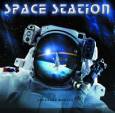 IMAX
Theater IMAX
Theater
Blast off on a thrilling adventure more than two hundred miles
above Earth! IMAX will take you to the heart of the action as
the daring astronaut construction crews put together the largest
and most complex structure ever assembled in space. Inside, you
will float alongside the first men and women to inhabit the new
station while they set up house, add new modules and perform scientific
experiments, all while experiencing the thrill of life in zero-gravity.
URL: http://www.vasc.org/spacestation.html
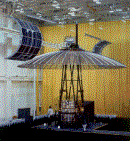 The ATS 6 The ATS 6
You will see the first of the
second-generation ATS spacecraft, ATS-6, which was also the last
ATS project. Learn about this satellite, a little history of satellites,
& what satellite is named a tiny mammal like we studied at
the beginning of the year. URLs:
·
ATS 6 Info http://roland.lerc.nasa.gov/~dglover/sat/ats6.html
· ATS 6 Statistics http://leonardo.jpl.nasa.gov/msl/QuickLooks/ats6QL.html
·
History of NASA Satellites http://roland.lerc.nasa.gov/~dglover/sat/satcom2.html#ATS6
 Meteorology Meteorology
At this permanent exhib: You will be able to 'Touch a
Tornado,' experience 'Meteorology Magic,'
& learn about hurricanes in 'Eye of the Storm.'
URL: http://www.vasc.org/wildweather.html
 This stop on our Agenda is a hands-on laboratory, computer
experience where students research weather conditions using the
Center's weather station, work with a global positioning system,
and interpret satellite images captured with remote sensing. This stop on our Agenda is a hands-on laboratory, computer
experience where students research weather conditions using the
Center's weather station, work with a global positioning system,
and interpret satellite images captured with remote sensing.
These are the three workstations
which you will be accessing in teams of 3:
·
Weather Station
- Researchers will go outside (actually the roof of the museum)
where they will gather current local weather data. Later, they
will use information gained from a series of remote weather tracking
stations to check weather across the US.
·
GPS - Students
will read & interpret aviation charts/maps used by pilots
to determine latitude, longitude of various US airports.
·
Remote Sensing
- Analysts will explore detailed aerial & satellite photographs
of maps from the Cleveland area.
URL: http://www.vasc.org/aerozone.html
| 



